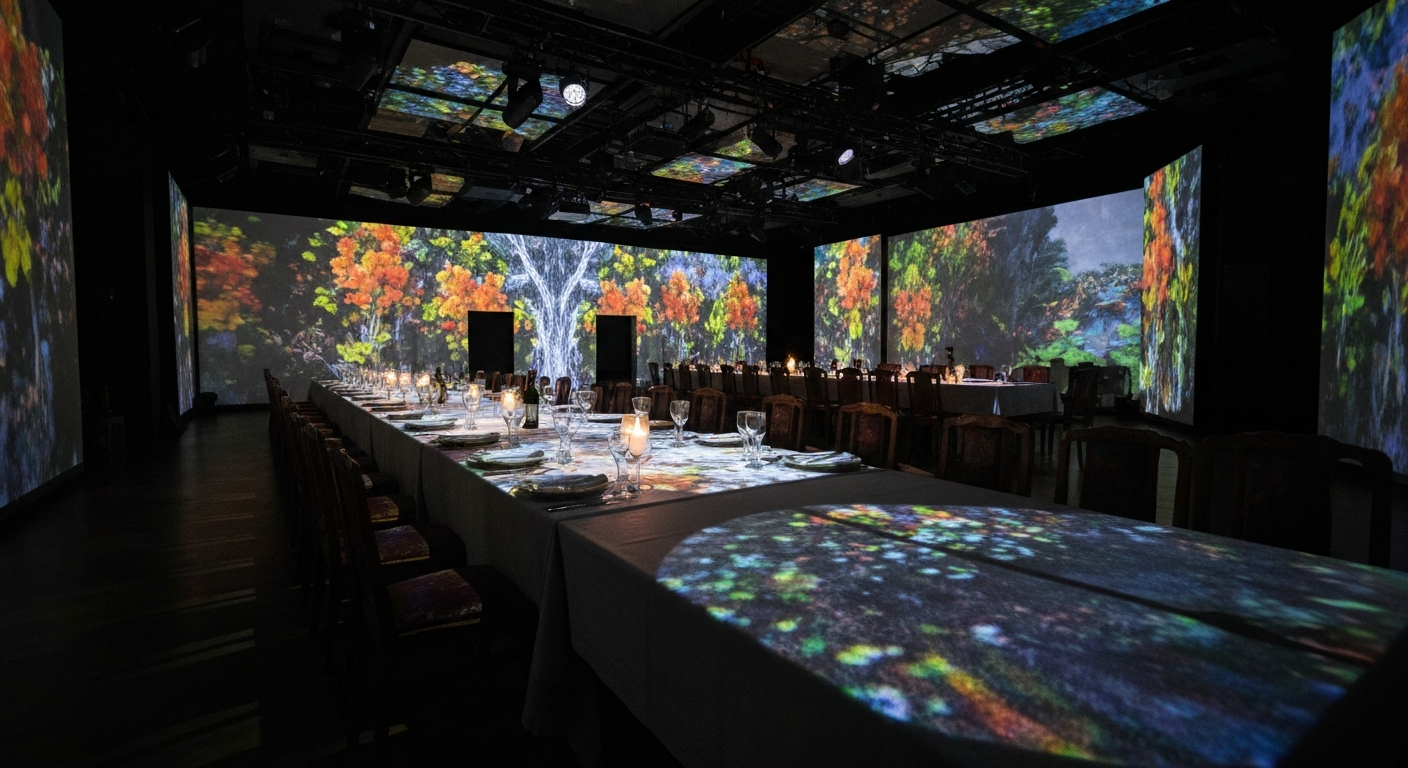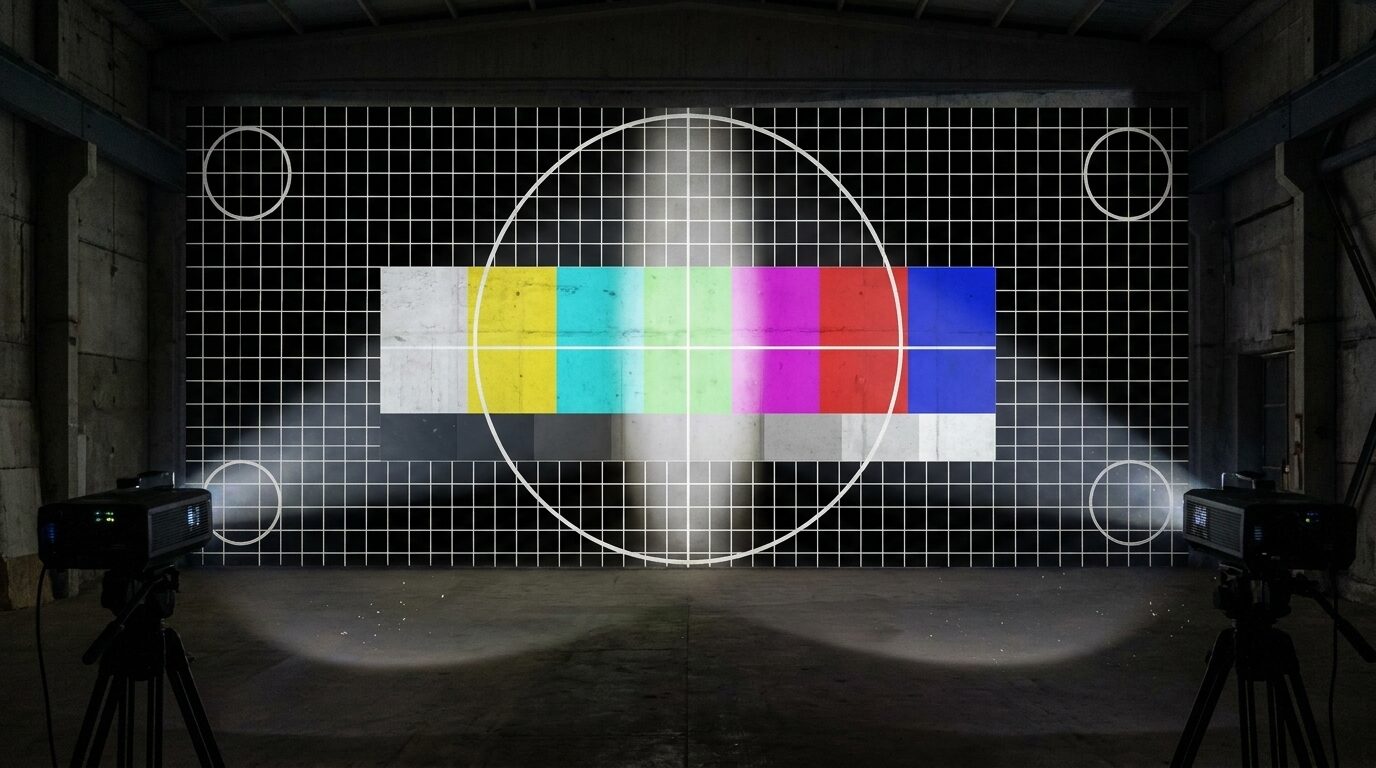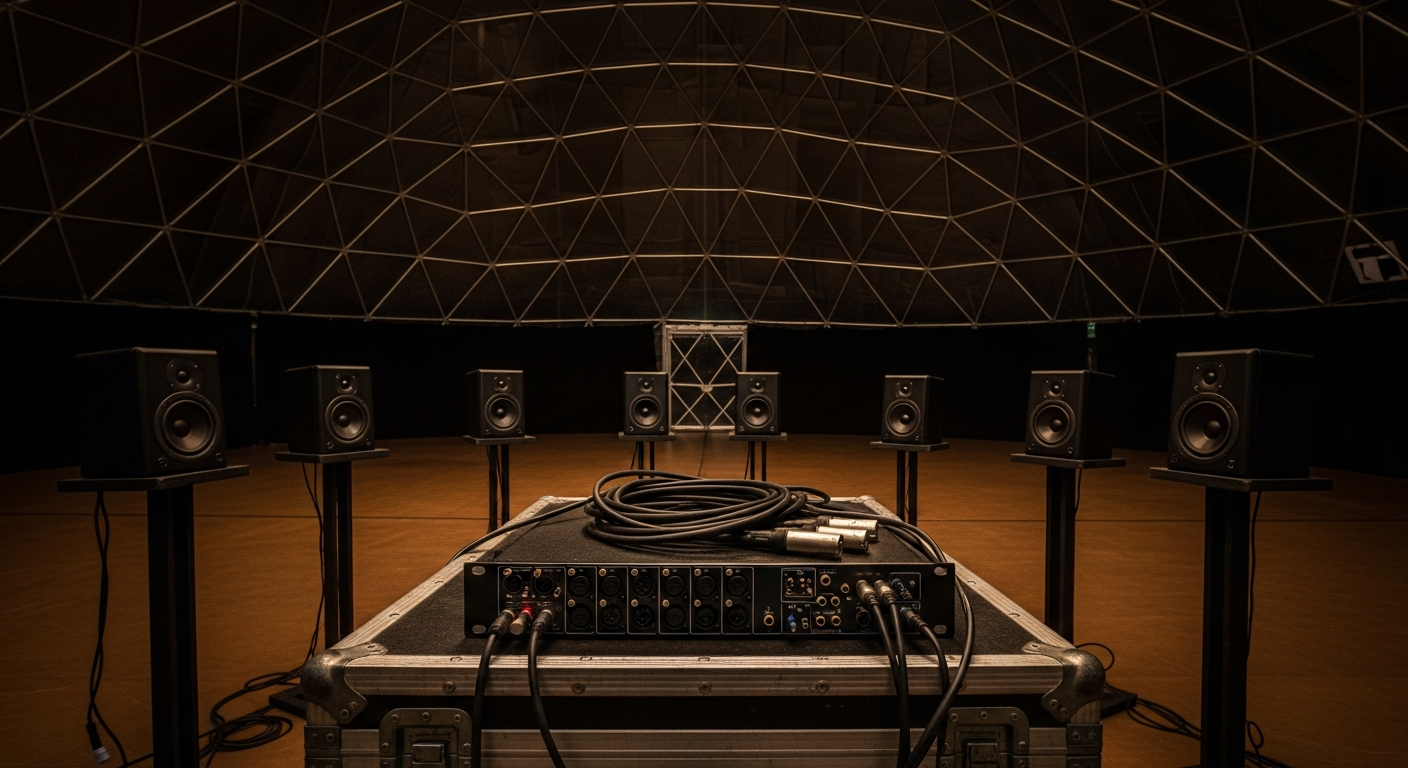
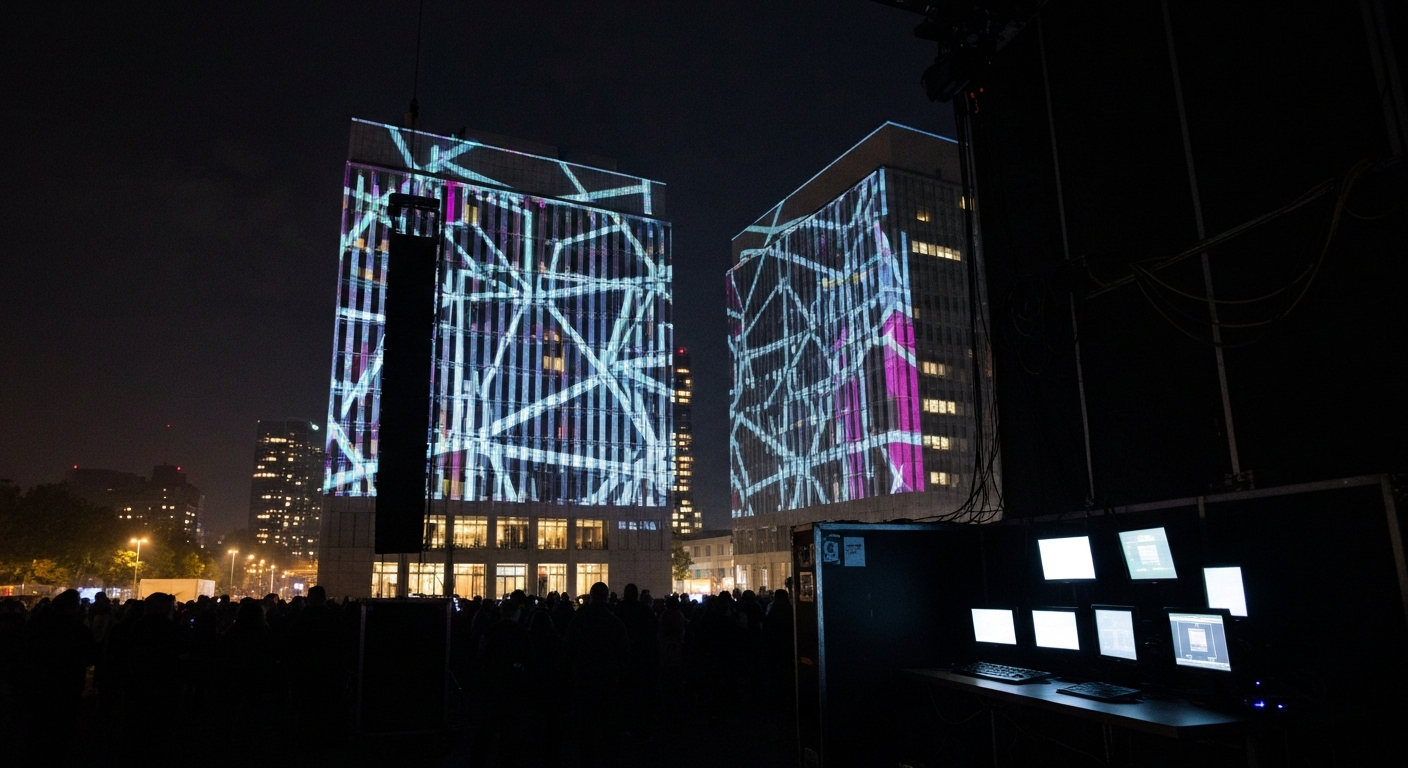
Walk into a brand launch, a concert, a museum lobby, or a restaurant opening in 2026 and you'll see something that didn't exist a generation ago: a surface that used to be decoration - a wall, a building facade, a sculpture, a ceiling - now carrying active, choreographed imagery that moves with the room. Projection mapping stopped being a trick. It became part of how events look.
The interesting question isn't whether this happened. It obviously did. The interesting question is why, and what the shift tells us about where live experiences are going next.
From novelty to expectation
The early 2010s wave of projection-mapped building facades - 59 Productions, Obscura Digital, The Macula - were marquee events. People traveled to see them. By the mid-2010s, mid-tier brand activations were putting mapped logos on pop-up walls. By 2020, even a local bar's grand-opening party might have a mapped feature column. The technology dropped in price while audience expectations climbed.
Three things drove this. Projector lumens per dollar roughly quintupled between 2010 and 2020. Content tools - Notch, Resolume, MadMapper, Luxedo - collapsed what used to be an Adobe-to-Houdini pipeline into something a single operator could drive live. And GPUs got fast enough that real-time visual effects became possible on laptop-class hardware.
The combined effect: a mapping show that cost 500 thousand dollars in 2012 costs 80 thousand in 2026 at equivalent visual fidelity. Budgets that previously couldn't touch the medium now routinely include it.
Why audiences stopped being impressed by screens
There's a deeper shift underneath the market one. A generation raised on phones is unimpressed by screens. What still reads as special is physical presence - a building that looks alive, a sculpture you walk around that changes, a space that wraps you. Projection mapping moves imagery off the screen and onto the environment itself. That's not a gimmick; it's the medium doing what film and TV fundamentally can't.
The right question isn't "should we project on the venue?" It's "what does the room want to become for the next three hours?"
Where the good work is moving
The reliable bread-and-butter projection work - "put the logo on the wall" - is getting commoditized. Rental houses bundle it. Content houses sell stock loops. That's fine, but it isn't where the interesting work lives.
The interesting work is moving in three directions. First, real-time generative content that reacts to the room - crowd density, music, cameras, sensors. Second, integration with other media - projection plus physical effects, LED plus projection, projection plus interactive. Third, narrative design: shows that tell a story over 90 minutes rather than loops that pulse.
- Real-time VFX pipelines driving content live, not pre-rendered playback with cue triggers.
- Multi-surface design that plans screens, LED, projection, and architectural lighting as one show, not three overlapping departments.
- Sensor integration so the space responds to the audience - camera-reactive, gesture-reactive, biometric-reactive.
- Longer-form narrative arcs that treat the show as a piece with a beginning and end, not an ambient texture.
The next five years
Three predictions, made with the usual confidence of a prediction. First, the line between projection mapping and LED volumes is going to keep blurring - hybrid rigs will become standard for premium activations because each technology covers the other's weaknesses. Second, AI-assisted content production is going to eat the bottom half of the content market, which will push premium work toward real-time and bespoke. Third, venues will start being designed around the assumption that projection is a first-class surface treatment, not an afterthought bolted to the truss.
None of this makes projection mapping more specialized. It makes it more integrated - which means the teams that can speak projection and content and hardware and narrative, all at once, are going to be the ones shaping the next decade of live experiences.